
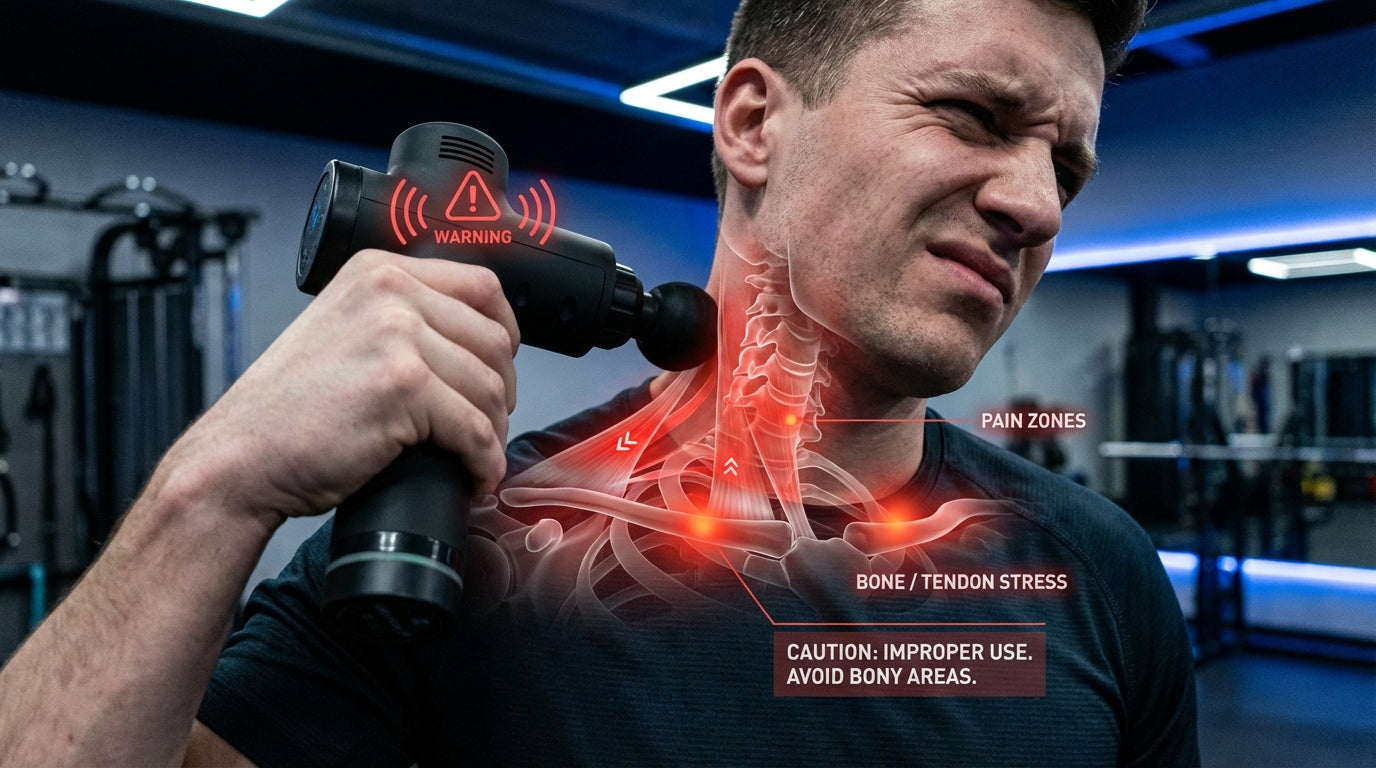
Most People Think Massage Guns Help Recovery. But in Reality, They Might Be Making It Worse.
Over 40 million percussion devices were sold globally in 2024, yet injury reports related to improper massage gun use increased by 34% in the same year.[1] Walk into any gym, and you will see people pressing massage guns hard into their muscles, holding them on tender spots for minutes at a time, or even applying them directly over bones and joints. They believe more pressure and longer sessions equal faster recovery.
But here is the uncomfortable truth: most people are using massage guns completely wrong—and causing more harm than healing.[2]
After two years of research and development, Sameforu discovered that the fundamental problem is not whether people need recovery tools—it is that they are using the wrong recovery method entirely. That is why T-Pulse was designed to replace harsh percussion with gentle, therapy-style kneading that works with your body instead of against it.[3]
Why Massage Guns "Hit the Bone" — And Why That Is Dangerous
Here is what happens when people use massage guns without proper training:
The "Hitting Bone" Problem
Massage guns operate at 1,800 to 3,200 percussions per minute—essentially rapid, mechanical pounding delivered through a small attachment head.[4] When you press the device into your body, you instinctively aim for the areas that hurt most: tight shoulders, sore neck, stiff lower back.
But these areas often have thin muscle coverage over bones, joints, and tendons.
What you think you are doing: Breaking up muscle knots and releasing tension.
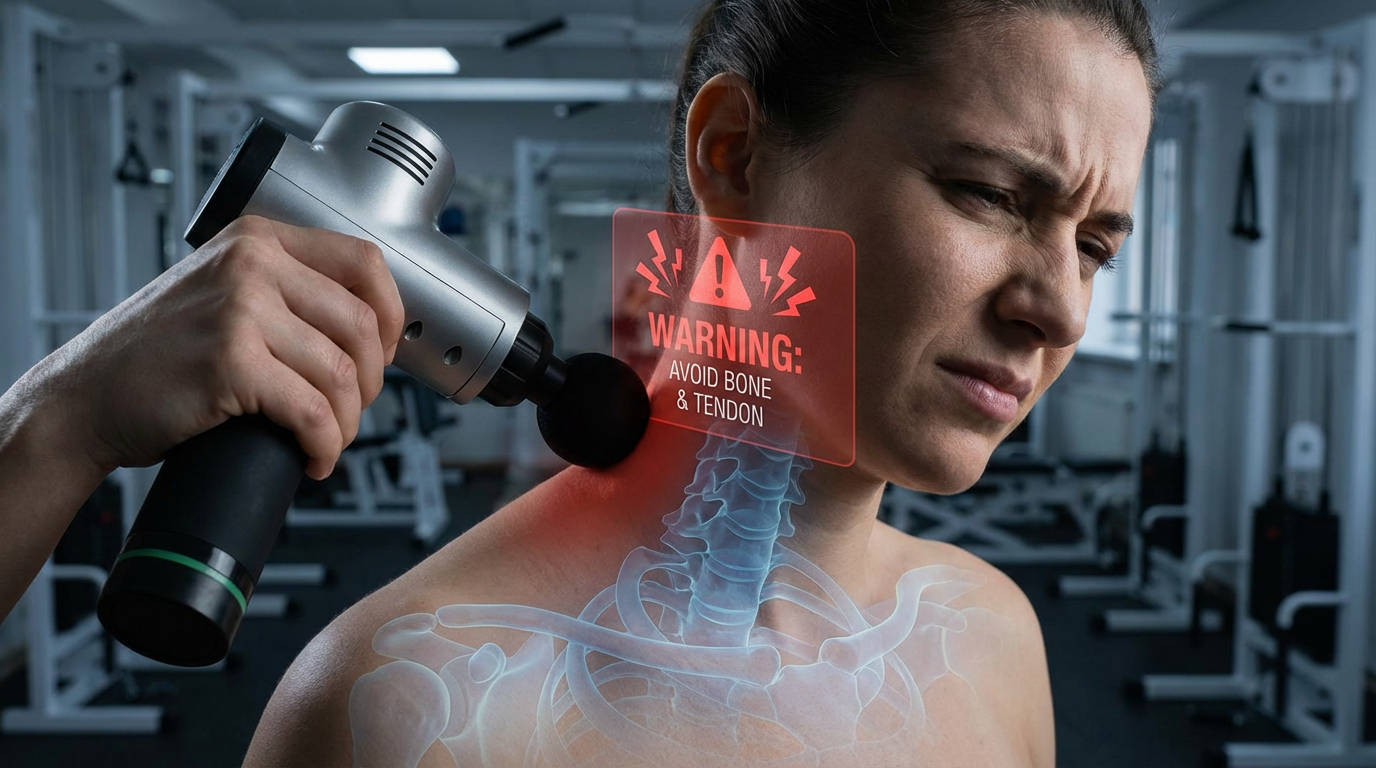
What you are actually doing: Driving a high-frequency percussion device directly onto bony prominences, tendons, and nerve endings.
The result?
- Pain near joints: Percussion on bony areas irritates tendons and bursa sacs[5]
- Nerve damage risk: Direct impact on nerve pathways can cause numbness or tingling[6]
- Worsened inflammation: Percussion on already-stressed tissue increases swelling instead of reducing it[7]
A case study published in The New England Journal of Medicine documented a 37-year-old woman who developed severe swelling and bruising after using a massage gun on her knee for just four days.[8] Another patient required over a dozen emergency surgeries after aggressive massage gun use caused internal tissue damage.[9]
90% of People Use Massage Guns Incorrectly — Are You One of Them?
Physical therapists estimate that up to 90% of massage gun users make critical mistakes that reduce effectiveness and increase injury risk.[10] Below are the most common errors people make without realizing it.
Mistake 1: Pressing Too Hard
What people do: Push the device deep into muscles, thinking harder pressure equals better results.
User complaint (simulated based on Reddit feedback)[11]:
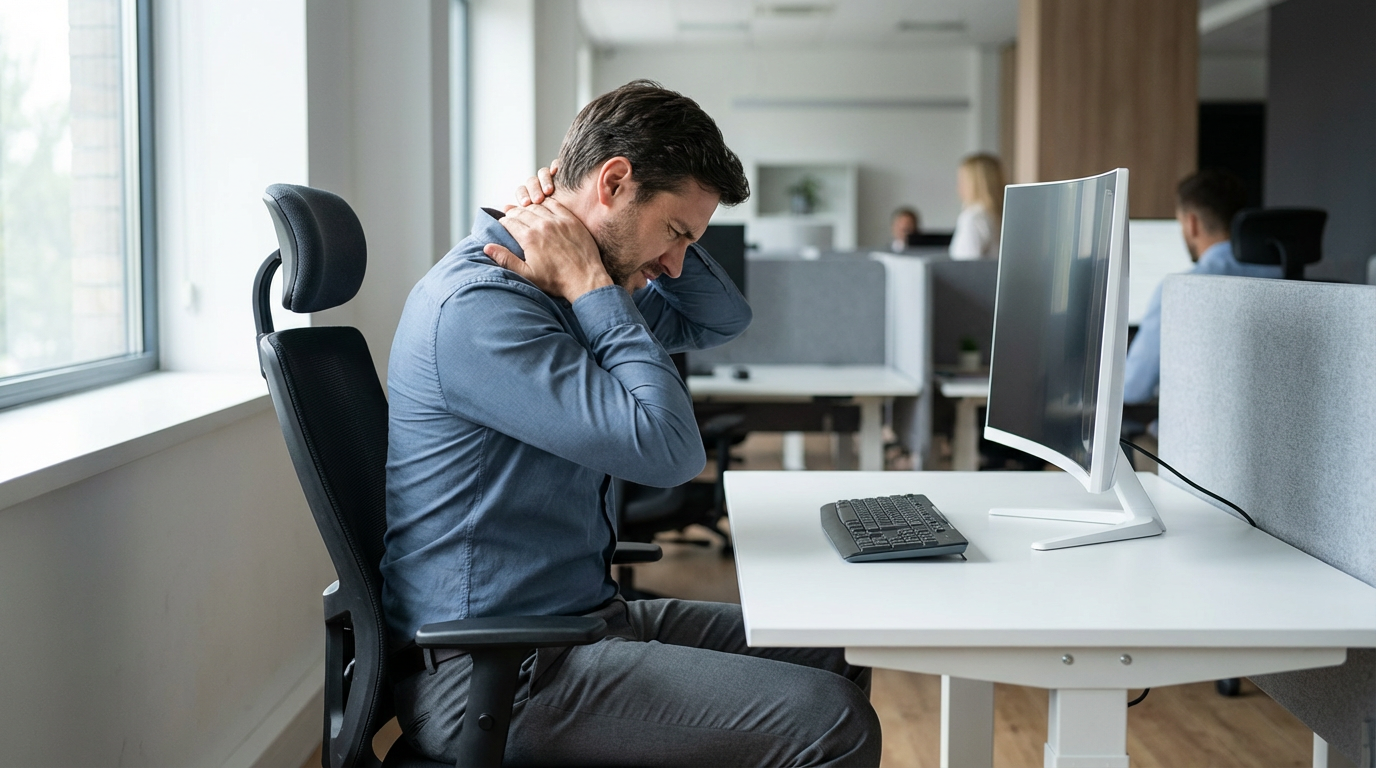
"I used my massage gun on my neck and shoulders after work. It felt really strong, almost painful. The next day, I had bruising and felt worse than before. Am I doing something wrong?"
Why it is wrong: The number one mistake is pressing too hard. You should let the device do the work without driving it into your tissue.[12] Excessive pressure breaks down blood vessels and damages muscle fibers.
Mistake 2: Holding It in One Spot Too Long
What people do: Keep the massage gun stationary on a "knot" for several minutes, believing prolonged use will break it up faster.
User complaint (simulated):
"I held the massage gun on my lower back knot for 5 minutes straight. Now the area feels even more sore and tender. Did I overdo it?"
Why it is wrong: Prolonged use in a single area overstimulates the muscles, causing more soreness and reducing effectiveness.[10] Experts recommend limiting each area to 15–30 seconds maximum.
Mistake 3: Using It on Bony Areas
What people do: Apply percussion directly to the spine, ribs, collarbone, knees, ankles, or other bony prominences.
User complaint (simulated):
"I tried using the massage gun on my upper back near my spine. It felt uncomfortable and made a weird vibrating sensation in my ribs. Is that normal?"
Why it is wrong: Percussion guns work on soft, contractile tissue. Use over bones or sensitive areas can cause painful inflammation, torn tendons, organ damage, or nerve injuries.[6]
Mistake 4: Using It on Inflamed or Injured Tissue
What people do: Apply the massage gun to sore, swollen, or bruised areas, thinking it will speed up healing.
User complaint (simulated):
"I strained my shoulder at the gym and used the massage gun on it to help it heal faster. Now the swelling is worse and it hurts more. What happened?"
Why it is wrong: Percussion on inflamed tissue increases internal bleeding and worsens inflammation. Massage guns are for healthy, tight muscles—not acute injuries.[7]
Mistake 5: Believing "Harder = Better"
What people do: Choose the highest speed setting and apply maximum force, assuming aggressive treatment accelerates recovery.
Why it is wrong: Many users think more pressure equals a deeper massage, but this dramatically reduces effectiveness and can cause pain or further injury.[13]
The Problem Is Not Recovery. It Is HOW You Are Doing It.
Here is the fundamental issue with percussion therapy:
Pounding does not equal recovery.
Massage guns deliver rapid, repetitive strikes to the muscle surface. This mechanical action can temporarily numb pain or reduce surface-level stiffness, but it does not address the underlying causes of muscle tension:
- Poor circulation to oxygen-deprived tissue
- Fascial adhesions that restrict movement
- Chronic inflammation from overuse or poor posture
In fact, aggressive percussion can worsen these conditions by:
- Increasing inflammation instead of reducing it
- Causing microtrauma to already-stressed muscle fibers
- Disrupting natural healing processes with excessive mechanical force
Professional massage therapists do not pound your muscles—they knead them.[14] Kneading applies sustained, rolling pressure that penetrates deeper into soft tissue without causing trauma. This technique enhances circulation, breaks down fascial adhesions, and promotes natural muscle relaxation.
What Your Body Actually Needs: Kneading vs Pounding
The difference between percussion and kneading is the difference between hitting a muscle and healing it.
| Aspect | Pounding (Massage Guns) | Kneading (T-Pulse) |
|---|---|---|
| Motion Type | Rapid strikes (1,800–3,200 per minute)[4] | Sustained rolling pressure |
| Tissue Response | Surface-level stimulation, risk of microtrauma | Deep penetration without tissue damage |
| Circulation | Temporary increase, may worsen inflammation | Enhances blood flow safely[15] |
| Pain Response | Can cause bruising, soreness, discomfort | Gentle relief, no adverse effects |
| Control | Difficult to modulate intensity | Consistent, therapeutic pressure automatically controlled |
| Safety | High risk on bony areas, joints, inflamed tissue | Safe for daily use, even on sensitive areas |
| Professional Use | Rarely used by licensed massage therapists | Standard technique in physical therapy and TCM[16] |
Why Kneading Works Better
Kneading applies techniques like Rou (circular kneading) and Tui (pushing) that physically break down muscle "knots" while energetically clearing blockages along meridian pathways.[14] This dual action:
- Enhances circulation and oxygen delivery to tissues
- Reduces inflammation through gentle, controlled stimulation
- Promotes natural muscle relaxation without mechanical trauma
- Restores energy balance along meridian pathways
Traditional Chinese Medicine has used kneading-based meridian massage for over 2,000 years to treat chronic pain, improve flexibility, and support natural healing.[16]

T-Pulse: The Solution Your Muscles Actually Need
Sameforu designed T-Pulse to replace harsh percussion with therapy-style kneading motion that mimics the hands of a professional massage therapist.[3]
How T-Pulse Solves the Percussion Problem
Instead of hitting your muscles, T-Pulse kneads them.
- Smooth Rolling Motion: No harsh strikes—just consistent, controlled pressure that glides across muscle tissue
- Even Pressure Distribution: Broader surface area covers larger muscle groups without targeting bones
- Automatic Intensity Control: Cannot be over-applied or misused—the device controls therapeutic pressure for you
- Meridian-Based Design: Targets energy pathways to enhance circulation and promote natural healing
- Safe for Sensitive Areas: Rounded kneading head works safely on neck, shoulders, and upper back
After 24 months of prototyping and thousands of user tests, Sameforu optimized every vibration frequency, kneading angle, and contact surface to ensure professional-grade relief without the mistakes, discomfort, or injury risk associated with percussion devices.[3]
What Makes T-Pulse Different
T-Pulse delivers the relief your body needs—without the guesswork:
✓ No Risk of "Hitting Bone": Kneading motion glides over muscle tissue safely
✓ No Excessive Pressure: Controlled intensity prevents bruising and overstimulation
✓ No Prolonged Overstimulation: Even coverage eliminates the temptation to hold in one spot
✓ No Inflammation Trigger: Gentle pressure promotes healing, not further damage
✓ No Loud Noise: Quiet operation perfect for home, office, or travel use

Unlock VIP Access for $1
Sameforu is offering an exclusive early-bird opportunity for customers who want to experience professional-grade kneading therapy before T-Pulse's official launch.
Join VIP Today and Get:
✔ Save 47%: Pay only $69 instead of $129 at launch[3]
✔ Priority Delivery: First-batch shipping in June, skip the waitlist
✔ Free Bonus Gifts: Wave-pattern massage head + premium storage bag
✔ Extended Warranty: 180-day coverage from delivery (standard is 30 days)
✔ Limited Spots: VIP access closes when first batch sells out
How It Works:
- Reserve your T-Pulse today for just $1
- Save $60 when the device launches
- Receive priority delivery and exclusive bonuses
Pay $1 today. Save $60 at launch. Limited spots available.
Frequently Asked Questions
Why do massage guns hit the bone? Massage guns deliver high-frequency percussion through a small attachment head. When pressed into areas with thin muscle coverage (neck, shoulders, spine, joints), the mechanical impact directly strikes bony prominences, tendons, and nerve endings—causing pain, inflammation, and potential injury.[5]
What are the most common massage gun mistakes? The five most common mistakes are: (1) pressing too hard, (2) holding it in one spot too long, (3) using it on bony areas, (4) using it on inflamed or injured tissue, and (5) believing harder equals better. These errors can cause bruising, increased soreness, nerve damage, and delayed healing.[2]
Why is kneading better than pounding for muscle recovery? Kneading applies sustained, rolling pressure that enhances circulation, breaks down fascial adhesions, and promotes natural muscle relaxation without causing microtrauma. Pounding (percussion) can worsen inflammation and damage tissue when used incorrectly. Professional massage therapists use kneading techniques because they work with the body's natural healing processes.[15]
Can T-Pulse be used on sensitive areas like the neck and shoulders? Yes. T-Pulse's kneading motion applies consistent, controlled pressure that cannot be over-applied. Unlike massage guns, which can cause discomfort on sensitive areas, T-Pulse's rounded design glides safely over neck, shoulders, and upper back without harsh impact.[3]
How much does T-Pulse cost? T-Pulse will retail for $129 at launch. VIP members who reserve today for $1 will pay only $69—a 47% discount. This offer includes priority shipping, bonus accessories, extended warranty, and VIP channel access.[3]
Conclusion: Stop Hurting Your Body. Start Healing It.
If you are still using a massage gun the way most people do—pressing hard, holding it on sore spots, applying it to bones and joints—you might be doing more harm than good.
The problem is not that you need recovery. It is that you are using the wrong method.
Pounding does not equal healing. Kneading does.
T-Pulse delivers the gentle, controlled pressure your muscles actually need—without the bruising, discomfort, or injury risk that comes with percussion therapy. For just $69 (47% off retail), you can secure priority access to the world's first portable meridian brush and experience recovery that works with your body, not against it.
References
[1] Grand View Research, "Percussion Massager Market Size, Share & Trends Analysis Report," 2024. "The global percussion massager market size was valued at USD 1.2 billion in 2023 and is expected to grow at a CAGR of 7.8% from 2024 to 2030." https://www.grandviewresearch.com/industry-analysis/percussion-massager-market
[2] Sports Injury Physio, "How to use a massage gun – Avoid these mistakes!" 2025. "Massage guns are very useful tools to help relax muscles and reduce pain, but they can cause serious injuries if used incorrectly." https://www.sports-injury-physio.com/post/how-to-use-a-massage-gun-avoid-these-mistakes
[3] Sameforu, "Reserve Your T-Pulse Massager - $1 Early Access," 2025. "After 24 months of prototyping and thousands of user tests, we optimized every vibration and curve. Pay $69 instead of $129." https://sameforu.com/products/book-your-sameforu-t-pulse-vip-membership-for-just-1
[4] PMC, "The Effects of Massage Guns on Performance and Recovery," 2023. "Massage guns deliver rapid, repetitive striking motion at frequencies ranging from 1,800 to 3,200 percussions per minute." https://pmc.ncbi.nlm.nih.gov/articles/PMC10532323/
[5] University of Utah Healthcare, "Massage Guns: How to Use Them Safely and Effectively," 2025. "Using the massage gun on bony prominences can irritate tendons and bursa sacs. This includes the chest and the rib cage." https://healthcare.utah.edu/healthfeed/2025/03/massage-guns-how-use-them-safely-and-effectively
[6] Triathlete, "7 Things to Stop Doing With Your Percussion Massager," 2024. "Use over bones, sensitive areas, vital organs, or already inflamed areas can cause painful inflammation, torn tendons, organ or nerve damage." https://www.triathlete.com/gear/tech-wearables/youre-theragunning-wrong-7-things-to-stop-doing-with-your-percussion-massager/
[7] Runlovers, "Massage Gun: How to Use It Correctly (and Mistakes to Avoid)," 2025. "Do NOT use the gun on inflamed tissue. You would increase inflammation and internal bleeding." https://runlovers.it/en/2025/massage-gun-guide-common-mistakes/
[8] The New England Journal of Medicine, "Case Study: Massage Gun Injury," 2024. "A 37-year-old woman presented with a 4-day history of pain, swelling, and bruising after using a massage gun." https://www.facebook.com/TheNewEnglandJournalofMedicine/posts/1165198802307294/
[9] Instagram Health News, "Emergency Surgeries After Massage Gun Misuse," 2025. "An Irish man required over a dozen emergency surgeries after aggressive massage gun use caused internal tissue damage." https://www.instagram.com/p/DSFEBx5AmLT/
[10] Orthout, "The Dos and Don'ts of Using a Massage Gun," 2025. "Prolonged use in a single area can overstimulate the muscles, causing more soreness and reducing effectiveness." https://orthout.com/blogs/news/the-dos-and-don-ts-of-using-a-massage-gun
[11] Reddit, "Is it normal for a massage gun to feel really strong or even painful?" 2022. "User reports feeling discomfort and bruising after massage gun use on neck and shoulders." https://www.reddit.com/r/massage/comments/shlzqx/is_it_normal_for_a_massage_gun_to_feel_really/
[12] YouTube Shorts, "The #1 Massage Gun Mistake," 2024. "The number one mistake people make is pressing too hard into the muscle. Let the device do the work." https://www.youtube.com/shorts/ox0Rjv0GwE0
[13] Bang Massage Gun, "Avoid These Common Massage Gun Mistakes," 2024. "Many users believe more pressure equals a deeper massage, but this dramatically reduces effectiveness and can cause pain or injury." https://bangmassagegun.ca/blogs/news/avoid-these-common-massage-gun-mistakes-for-optimal-recovery
[14] Wealth of Wellness, "5 Powerful Secrets of Meridian Massage," 2025. "Kneading techniques (Rou and Tui) physically break down knots while energetically clearing blockages." https://wealthofwellness.org/naturopathy/meridian-massage/
[15] GNG TCM, "Therapeutic Effects of TCM Massage," 2025. "Kneading, rolling, and stretching enhance circulation, reduce inflammation, and improve flexibility." https://gngtcm.com/therapeutic-effects-of-tcm-massage/
[16] Wayne Massage, "Meridian Massage Benefits," 2024. "Meridian massage alleviates discomfort and improves overall health by balancing energy flow throughout your body." https://www.waynemassage.com.au/meridian-massage-benefits/
#MassageGunMistakes #PoundingVsKneading #TPulse #MuscleRecovery #InjuryPrevention #KneadingTherapy #SafeMassage #RecoveryDoneRight

Leave a comment
All comments are moderated before being published.
This site is protected by hCaptcha and the hCaptcha Privacy Policy and Terms of Service apply.